The protection edit · Hillside, NJ
Self-healing PPF & headlight protection, explained.
What the film can do. Where it makes sense. How to look after it. A practical guide for North Jersey drivers.
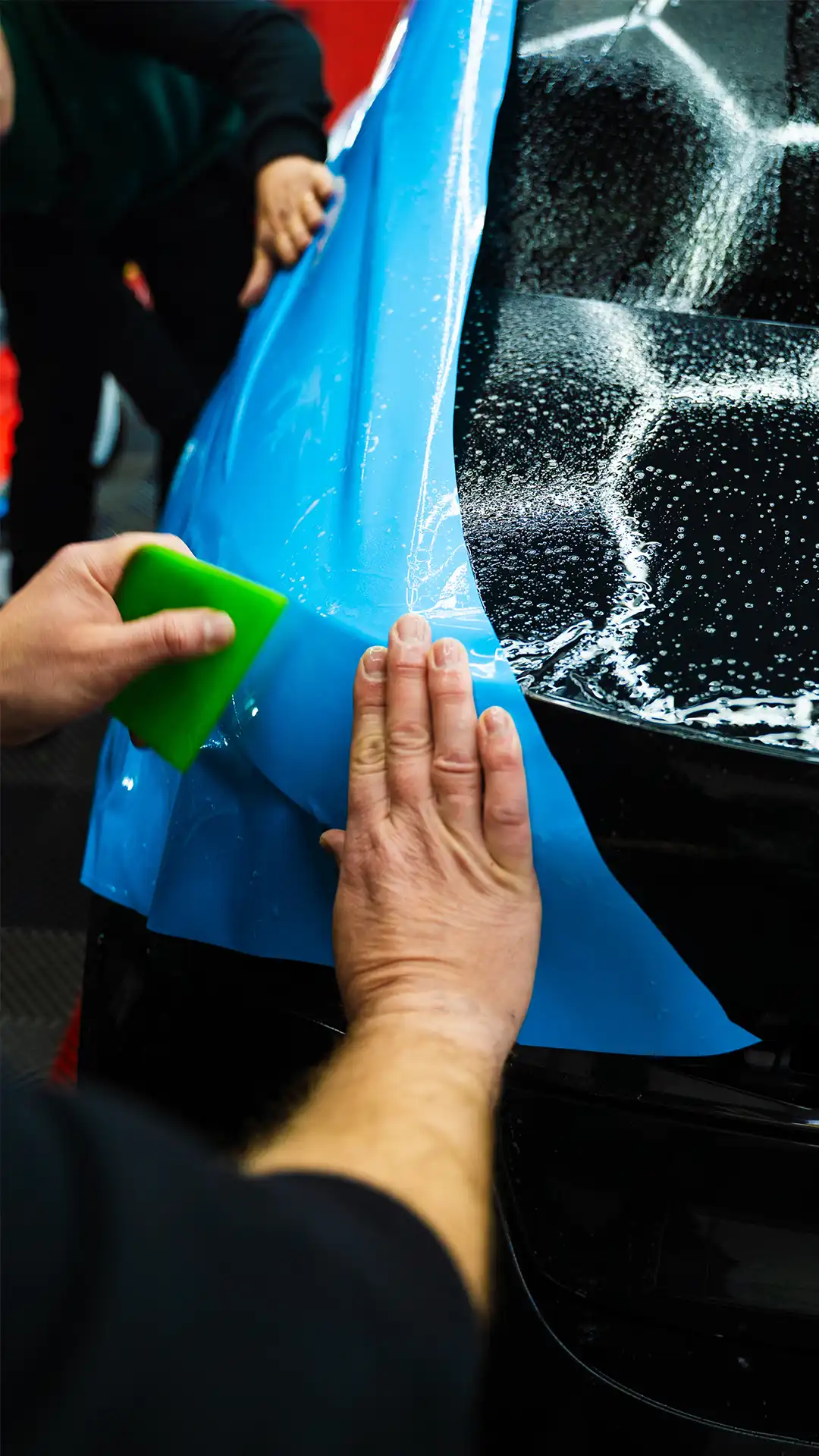
01 / Self-healing paint protection film
Small marks.
Not permanent damage.
Self-healing PPF has a topcoat that can recover from light surface marks with warmth. It is the film’s surface that recovers — not the paint underneath.
A cut through the topcoat, a puncture or damage to the paint will not simply disappear. Ask your installer to assess a deeper mark instead of trying a heat gun at home.
Product reference: STEK DYNOshield and self-healing limitations.
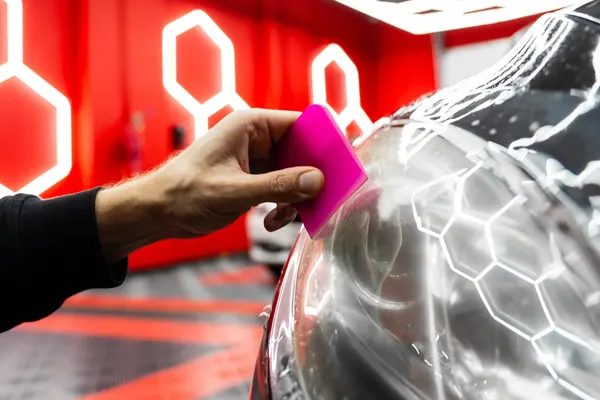
02 / Headlight protection film
Protection and tint
are different decisions.
Headlight protection film adds a protective layer over the lens. Products made for automotive lights can help reduce damage from road debris and surface scratches.
If your goal is protection without a darker look, ask about a clear, lens-compatible option. Smoked or colored film changes the appearance; it is not interchangeable with clear protection.
- Have existing haze, cracks or failing lens coatings inspected first. Film is not a lens repair.
- Confirm the exact product is suitable for your headlights and check lighting requirements before choosing a tint.
- Ask for the headlight film’s own warranty terms — a paint-film warranty does not automatically apply.
Product reference: STEK light protection films. Availability and suitability should be confirmed for your vehicle.

03 / Choosing PPF coverage
Protect the areas
that matter to you.
For a Hillside-to-Newark commute or regular North Jersey highway driving, discuss your route, parking habits and paint condition before choosing a package.
- Front-end coverage
- Ask which parts of the bumper, hood, fenders and mirrors are included — and whether panels are fully or partially covered.
- Full-body coverage
- Confirm the complete panel list, edges and exclusions. “Full car” should not leave you guessing about the scope.
- Small, high-contact areas
- Door cups, rocker panels and loading edges may be worth discussing if these are where you notice wear.
04 / PPF aftercare
A gentle routine goes a long way.
Follow the instructions for your installed film, including when you can first wash it.
Wash gently
Hand-wash with suitable products. Avoid abrasive pads and harsh chemicals.
Respect the edges
Do not aim a pressure washer at film edges. STEK advises keeping the nozzle at least 36 inches away.
Clean, then dry
Remove bugs and bird droppings promptly. Dry the surface to help prevent water spots; ask an installer about lifting or deep marks.
Care reference: STEK’s official care guidance. Instructions and warranty terms vary by product.